FREE CAR REMOVAL 24/7

FREE CAR REMOVAL 24/7
In Sydney, a flood-damaged car is worth between $300 and $9,999 in instant cash, depending on the vehicle’s curb weight, make, model, catalytic converter specs, and whether the submersion involved fresh or salt water. Under Transport for NSW regulations, water-submerged vehicles are recorded on the Written-Off Vehicle Register (WOVR) as statutory write-offs, meaning they cannot be re-registered or legally driven again. Instead of letting a waterlogged car sit rusting in your driveway, using an AI-powered appraisal system allows you to calculate its exact salvage value based on live scrap metal index rates and uncorroded component demand. Licensed recyclers like Express Car Removals provide instant quotes, same-day towing, and on-the-spot cash payments for eco-friendly damaged car disposal across all Greater Sydney suburbs.
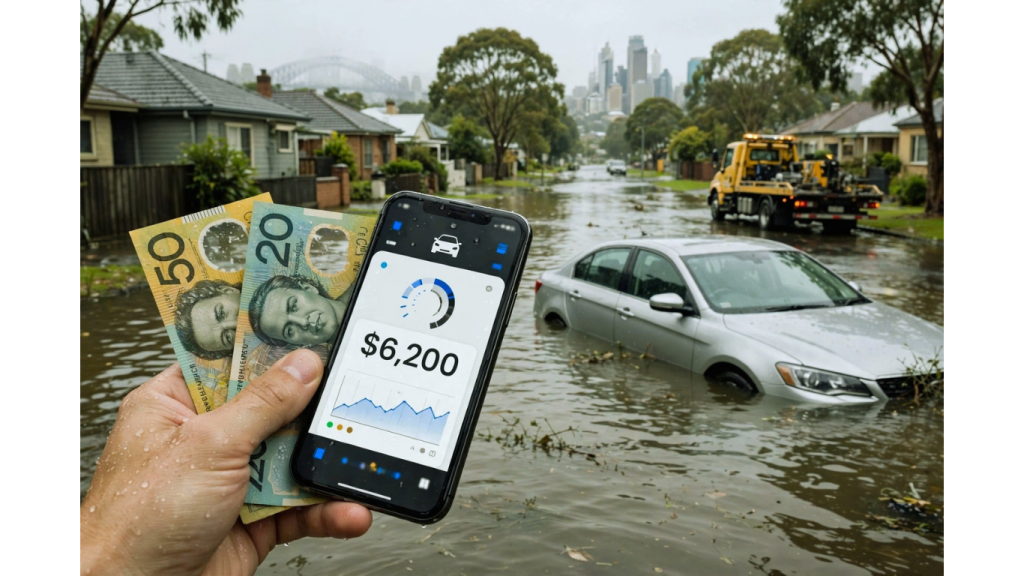
The payout for a flood-damaged car depends on its remaining recyclable components and gross weight rather than its roadworthiness.
When floodwaters submerge an engine bay, water enters the intake manifold, causing severe hydro-lock. Simultaneously, electrical harnesses, engine control units (ECU), and airbag sensors suffer short circuits. Because repairing these systems usually costs more than the car’s pre-flood market value, insurers write the vehicle off.
However, a flood-damaged car retains substantial intrinsic value:
Traditional wreckers in Sydney often inspect a waterlogged vehicle and offer a generic, lowball flat rate based on visual guesswork. In contrast, an AI valuation tool scans thousands of live market data points in seconds to determine the exact value of every kilogram of recyclable material.
A standard passenger car consists of roughly 65% steel and iron, along with recyclable aluminium suspension arms, brass fittings, and copper wiring harnesses. AI valuation platforms integrate directly with global metal exchanges, such as the London Metal Exchange (LME). When global scrap steel or recycled aluminium prices rise, the AI system instantly adjusts the payout higher.
The chemical composition of floodwater impacts salvage value:
Even if a vehicle’s electrical system is ruined, non-electrical components often remain unaffected:
If you own a popular vehicle in Australia—such as a Toyota HiLux or Ford Ranger—the AI algorithm factors in high demand for non-flooded body parts, increasing your cash offer.
The catalytic converter in your vehicle’s exhaust system contains three precious metals: platinum, palladium, and rhodium. Water submersion does not damage these interior precious metals. AI systems cross-reference your vehicle’s VIN or exact year, make, and model against manufacturing databases to calculate the exact precious metal yield inside the converter, unlocking hundreds of dollars that traditional buyers ignore.
In New South Wales, vehicle write-offs are strictly regulated by Transport for NSW (TfNSW) to protect consumers from unsafe vehicles returning to the road.
When you sell your waterlogged car to a licensed buyer like Express Car Removals, we handle the official Notice of Disposal paperwork, ensuring your liability ends the moment the vehicle is loaded onto our tow truck.
Evaluating disposal options helps ensure you receive full value for your written-off vehicle.
| Feature / Criteria | Traditional Scrap Yard Quote | Express Car Removals AI System |
| Quote Generation Speed | 24 to 48 hours (Manual site visits) | Under 60 seconds via online or phone inputs |
| Valuation Methodology | Generic flat-rate weight estimate | Real-time commodity index + part demand algorithm |
| Catalytic Converter Yield | Ignored or heavily discounted | Calculated using factory precious metal databases |
| Towing & Removal Costs | Often deducted (150–300 fee) | 100% Free towing across all Sydney suburbs |
| Price Guarantee | Subject to haggling upon arrival | Guaranteed firm cash offer on pickup |
| Maximum Payout Potential | Usually capped around 1,000–1,500 | Up to $9,999 for high-yield commercial vehicles |
Properly disposing of a flood-damaged vehicle is straightforward when using an automated removal service.
Contact Express Car Removals online or by phone. Provide essential vehicle parameters:
Gather required documentation:
Note: You do not need a pink slip, roadworthy certificate, or active registration to sell a damaged car for scrap.
Once you accept the guaranteed quote, a specialized tilt-tray tow truck is dispatched to your property. Our driver verifies your ownership documents, assists with basic transfer paperwork, completes your cash payment on the spot, and hauls the vehicle away free of charge.
In Sydney, cash payouts for flood-damaged cars range from $300 to $9,999 depending on the vehicle’s curb weight, year, make, model, catalytic converter precious metal content, and whether the water was fresh or salt water.
No. Under Transport for NSW regulations, vehicles written off due to water submersion are classified as statutory write-offs on the Written-Off Vehicle Register (WOVR). They cannot be re-registered or driven legally on NSW roads and must be recycled for scrap metal and reusable parts.
No. You do not need an eSafety check (pink slip), roadworthy certificate, or active registration to sell a flood-damaged vehicle to a licensed auto wrecker. You only need a valid photo ID and proof of ownership.
Saltwater flooding accelerates electrical short-circuiting and rapid chassis oxidation, reducing reusable electronic components. Freshwater flooding leaves heavy steel chassis structures, body panels, and catalytic converters intact, resulting in higher salvage valuations.
No. Reputable car removal operators provide 100% free towing across all Sydney suburbs—including Western Sydney, the Inner West, Campbelltown, and the Northern Beaches—with no hidden admin or call-out fees.
Do not let a waterlogged or hydro-locked vehicle sit deteriorating on your property. Turn your statutory write-off into instant cash using advanced, data-driven appraisal technology.
At Express Car Removals, we specialize in professional, eco-friendly damaged car disposal services. Our team provides rapid cash for cars in Sydney, offering accurate valuations based on real-time scrap metal indices, catalytic converter recovery, and reusable component demand. We handle all paperwork and provide free vehicle towing across Sydney so you can clear your space hassle-free.
Ready to find out what your flooded car is worth? Contact Express Car Removals online today or call our valuation desk directly at 0437 008 000 to collect up to $9,999 in instant cash!


